SimplePractice Referrals
SimplePractice is software that helps therapists and other clinicians run their practices. It brings everyday work like managing appointments and client information into one place.
Part of caring for clients is helping them find the right person to work with. A therapist may have a full schedule, or an existing client may need a different kind of care. We built Referrals to make it easier to find another provider and send the client a personal recommendation.
I led the referral strategy and concept testing, working with product and engineering to close gaps between our MVP and how therapists made referrals.
Problem and opportunity
Finding someone to recommend took real work. Clinicians needed to weigh the client's situation against what another practitioner could actually offer, and research showed they started with peers: people already in their professional network, whose judgment they trusted.
A recommendation also put their reputation on the line. A directory could expand their options beyond that network, but clinicians still needed to feel confident before referring anyone. The goal was to make search and handoff faster while keeping that judgment with them.
Solution
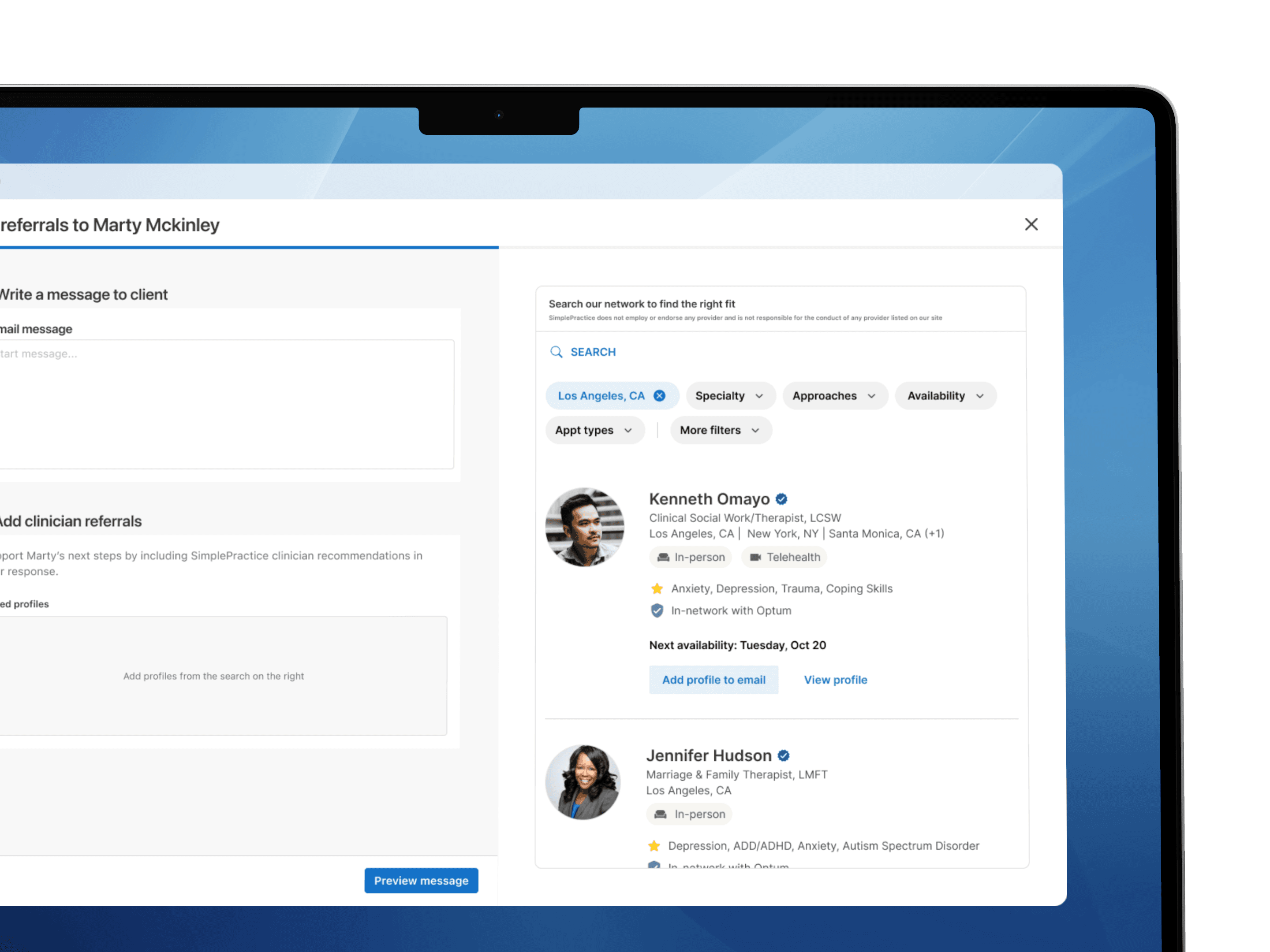
We brought clinician search and a referral email into one flow. Clinicians could find suitable practitioners, select profiles, and send a personalized recommendation. The same flow covered someone whose appointment request they couldn't accept and a client already on their caseload.
Details
Finding the right entry point
Our first concept tied referrals to declining an appointment request. During concept testing, one clinician needed to refer a client she was already seeing. That scenario didn't involve a pending request, so we added “Send referrals” to the client list as well.
Search beside the message
I placed Therapy Finder search beside the email preview. Clinicians could filter by specialty, insurance, and availability, then see their selected profiles appear in the message. They could recommend multiple people and tailor the email to the client.
We kept the first release focused on that email handoff. Saving trusted clinicians and direct messaging between clinicians stayed out of scope.
After release
The first version launched in February 2025. After we addressed the workflow gaps identified in concept testing, average weekly referrals increased from 13 to 350, a 2,592% increase.
A 2026 product summary reported that 11% of clients contacted the recommended clinician. Getting the email out was only the first step. Clients still had to initiate contact and navigate a new intake process on their own.
Referral volume was up, but clients weren't following through. We paused further work on the feature and shifted focus to that side of the handoff.